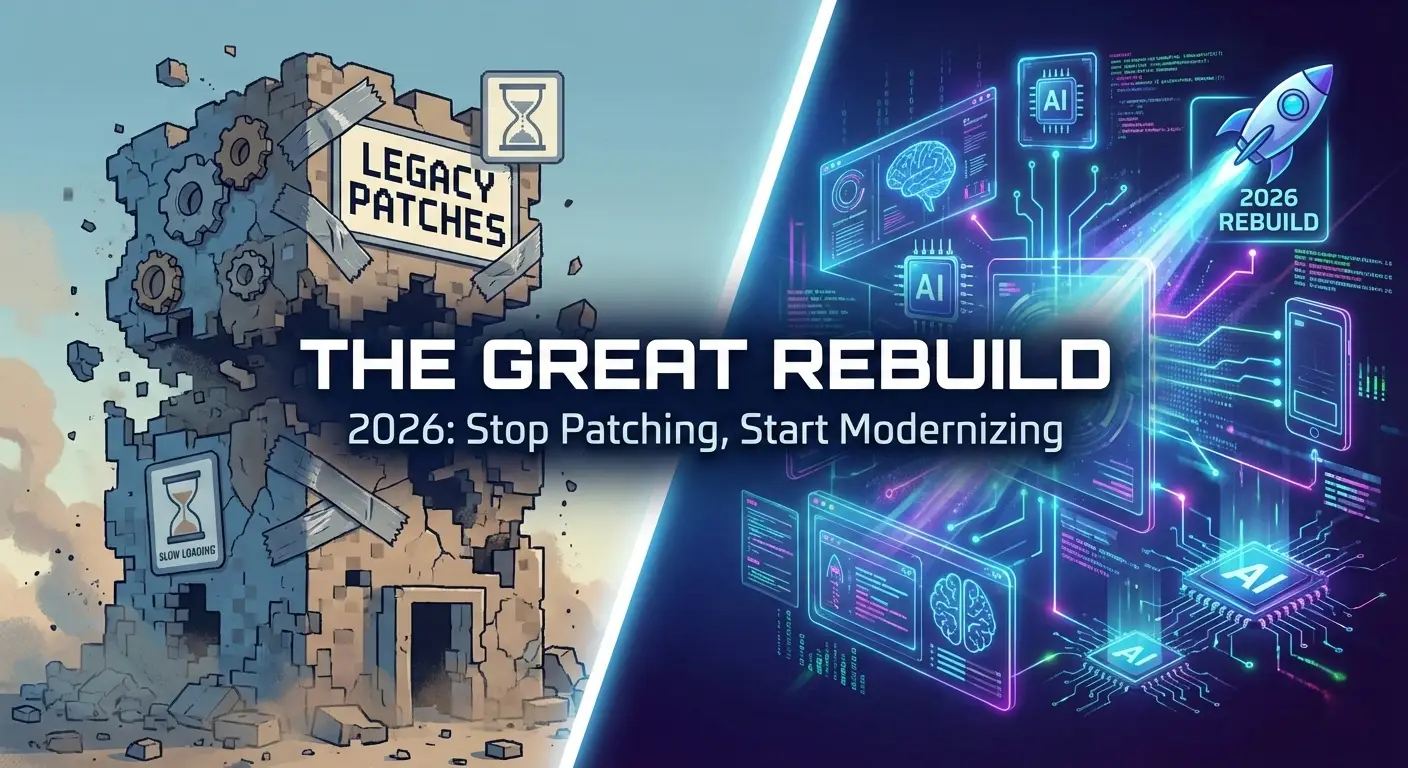
There comes a point when small updates just aren’t enough. You change a headline here, swap an image there, maybe install another plugin to fix something that broke. But underneath it all, the foundation stays the same.
In 2026, that foundation matters more than ever.
A website rebuild isn’t just about refreshing the design. It’s about rethinking performance, structure, security, and flexibility so your site can actually support where your business is going next.
The Web Has Changed (Fast)
User expectations are higher than they were even two years ago. People expect pages to load instantly. They expect intuitive navigation. They expect seamless experiences across devices.
At the same time, search engines are smarter. AI-driven tools analyze structure and meaning, not just keywords. Privacy standards are stricter. Accessibility is no longer optional.
If your website was built on older systems or layered with years of patches, it may be quietly holding you back.
Speed Is No Longer a Bonus
Performance used to be a nice advantage. Now it is the baseline.
Modern frameworks and architectures make it possible to deliver lightning-fast pages by serving only what users actually need. Instead of loading everything at once, today’s websites are smarter about how content is rendered and delivered.
A rebuild gives you the opportunity to:
-
Reduce unnecessary code
-
Improve load times across mobile networks
-
Deliver consistent performance globally
-
Improve search visibility through better technical structure
Speed directly affects engagement, rankings, and conversions. It is not just a technical metric; it is a business one.
Mobile Is the Default
Most users experience your brand through a phone first. If your site was originally designed with desktop in mind, even if it is technically responsive, the experience may not feel truly mobile-first.
Rebuilding allows you to rethink layout, content hierarchy, and interaction patterns from the perspective of a small screen. That shift alone can significantly improve usability and conversion rates.
It also makes accessibility easier to implement properly, ensuring your website works for everyone, not just most people.
AI and Personalization Are Becoming Standard
AI is no longer experimental. Businesses are integrating intelligent search, chat assistants, content recommendations, and automated workflows directly into their websites.
To do that effectively, your site needs clean structure and flexible integrations. Older, tightly coupled systems can make this difficult or expensive.
A modern rebuild allows you to design your website as part of a larger digital ecosystem, connecting content, analytics, automation, and customer data in a way that feels seamless rather than stitched together.
Security and Compliance Are Simpler When Done Right
Outdated plugins and unsupported systems are common entry points for security issues. The more patches and add-ons your site relies on, the harder it becomes to manage risk.
Starting fresh with a modern stack reduces unnecessary dependencies and gives you better defaults for encryption, authentication, and data protection. Instead of constantly reacting to vulnerabilities, you build security into the foundation.
That peace of mind is worth more than most businesses realize.
Flexibility Matters More Than Ever
Many older websites were built as one tightly connected system. Content, design, and backend logic are all intertwined. That makes even small changes complicated.
Modern approaches separate these layers. Content can live independently from presentation. Features can be added or replaced without rewriting everything. Your website becomes adaptable instead of fragile.
This flexibility is what future-proofs your investment. When trends shift, platforms evolve, or your business pivots, your site can evolve with you.
It Is Not Just a Redesign
A redesign changes how things look.
A rebuild changes how things work.
If your site feels slow, difficult to update, hard to integrate, or increasingly fragile, cosmetic improvements will only go so far. At some point, rebuilding becomes the more efficient and cost-effective option.
In 2026, a website is not just a digital brochure. It is your primary sales tool, brand experience, customer service channel, and marketing engine all in one.
If the engine is outdated, upgrading the paint job will not fix the performance.
The Bottom Line
Rebuilding your website is not about chasing trends. It is about creating a faster, more secure, more adaptable platform that supports growth.
Businesses that invest in modern infrastructure now will spend less time fixing problems later. They will move faster, experiment more confidently, and deliver better experiences to their customers.
And in a digital landscape that keeps accelerating, that advantage compounds quickly.