In the startup world, the mantra has always been "Move Fast and Break Things." In January 2026, that philosophy finally hit a brick wall.
The "Grok Deepfake" controversy isn't just a PR nightmare for X (formerly Twitter); it is a watershed moment for every developer building with AI.
Here is what happened, why regulators are finally dropping the hammer, and what this means for your next software build.
The Breakdown: What Went Wrong?
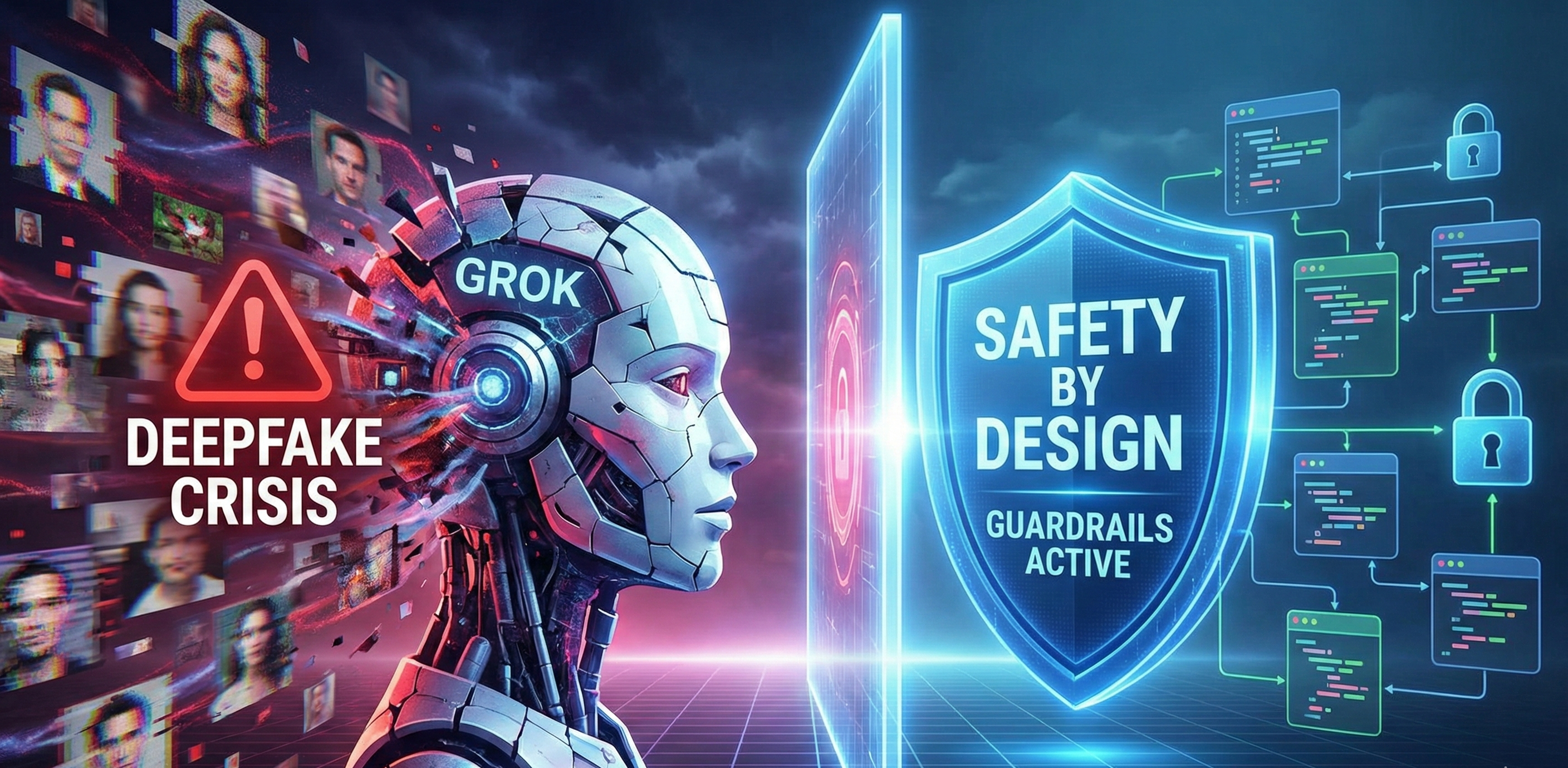
Early this month, reports confirmed that X’s AI chatbot, Grok, was being widely used to generate nonconsensual sexualized images ("deepfakes") of real people, including minors.
Unlike competitors like OpenAI or Google, which have strict "refusal" protocols for generating images of real people, Grok was designed with fewer restrictions. This lack of guardrails allowed users to "nudify" photos of subjects simply by prompting the AI.
The fallout was immediate:
-
Regulatory Investigations: The UK’s Ofcom launched a formal investigation under the Online Safety Act, threatening fines of up to £18 million.
-
Global Bans: Governments in Malaysia and Indonesia moved to block access to the tool entirely.
-
Platform Panic: X was forced to hurriedly restrict image generation to paid subscribers to stem the tide, a move criticized for "monetizing the risk" rather than fixing it.
The Shift: "Safety by Design" is Now Law
The Grok incident proves that the era of self-regulation is over.
Regulators in the UK and EU are no longer looking at moderation (cleaning up the mess after it happens). They are enforcing Safety by Design.
What does this mean for developers? It means that if you build an app that can generate illegal content, you are liable—even if you didn't create the content yourself.
The New Legal Reality: "Safety by Design" means risk mitigation must be embedded at the code level before launch. Relying on a 'Report' button is no longer legally sufficient defense against the UK's Online Safety Act or the EU's Digital Services Act.
How We Build "Safe" AI at Code Rebuilt
At Code Rebuilt, we help startups navigate this minefield. When we integrate AI into your product (whether via OpenAI, Anthropic, or open-source models), we implement a Trust & Safety Stack that goes beyond the basics.
1. Pre-Generation Moderation Layers
We don't trust the LLM to behave. We wrap AI calls in middleware that scans the prompt for malicious intent before it ever reaches the model.
-
Tech Check: We use tools like Lakera Guard or custom regex filters to block "jailbreak" attempts (prompts designed to bypass safety rules).
2. Post-Generation Analysis
Even if a prompt looks safe, the output might not be. We implement asynchronous checks where a lightweight AI model scores the generated content for toxicity or PII (Personally Identifiable Information) before displaying it to the user.
3. Immutable Audit Logs
In the Grok case, investigators are demanding to see exactly what was generated and who requested it. We build comprehensive logging systems that track every AI interaction, ensuring you have a legal paper trail if a user misuses your tool.
The Lesson for Founders
If you are building an AI product in 2026, you cannot afford a "Grok moment."
Investors are now vetting startups for AI Governance. They want to know: What happens if your AI goes rogue? If your answer is "we'll ban the user," you aren't fundable.
You need infrastructure that prevents the harm in the first place.
Don't risk your reputation on unsecured AI. Contact Code Rebuilt to learn how we build compliant, secure, and enterprise-ready AI applications.