For many small business owners, "marketing" feels like a synonym for "spending." Whether it's a local radio spot, a sponsored social media post, or a physical billboard, traditional advertising often feels like a treadmill: the moment you stop paying, the results stop coming.
In 2026, budget-conscious entrepreneurs are shifting their focus. They aren't just looking for visibility; they are looking for compounded growth. This is why Search Engine Optimization (SEO) has moved from a "tech luxury" to a financial necessity.
The Financial Reality: SEO vs. Traditional Advertising
When you pay for a digital ad (PPC), you are essentially renting space. Once your daily budget is exhausted, your "storefront" disappears from the top of the page.
SEO, however, is an investment in digital real estate. Instead of renting a billboard, you are building a skyscraper on land you own.
| Feature | Traditional / Paid Ads | Strategic SEO |
| Upfront Cost | Variable (Pay-per-click/view) | Consistent (Strategy & Content) |
| Longevity | Instant stop when budget ends | Long-term residual traffic |
| Trust Factor | "Sponsored" tag can deter users | Organic results earn higher trust |
| ROI over time | Stagnant or decreasing | Compounding returns |
Why SEO is a Smart Financial Choice for Small Businesses
1. Lower Customer Acquisition Cost (CAC)
In the long run, organic traffic is significantly cheaper than paid traffic. While SEO requires an initial investment in high-quality content and technical architecture, the cost-per-lead drops over time as your rankings stabilize. You aren't paying for every individual click; you’re paying for the infrastructure that attracts them automatically.
2. Higher Conversion Rates through Intent
Traditional ads are often "interruption marketing"—showing a product to someone while they are trying to do something else. SEO is "intent-based." When someone searches for a specific service, they are already halfway through the door. By appearing at the exact moment they are looking for a solution, your website’s ability to convert that visitor into a lead sky-rockets.
3. 24/7 Brand Visibility
Your SEO-optimized website doesn't clock out. It continues to answer questions, solve problems, and showcase your services while you sleep. For a small business with a limited team, having a website that acts as a high-performing sales agent is the most cost-effective way to scale operations.
4. Building Authority in the AI Era (GEO)
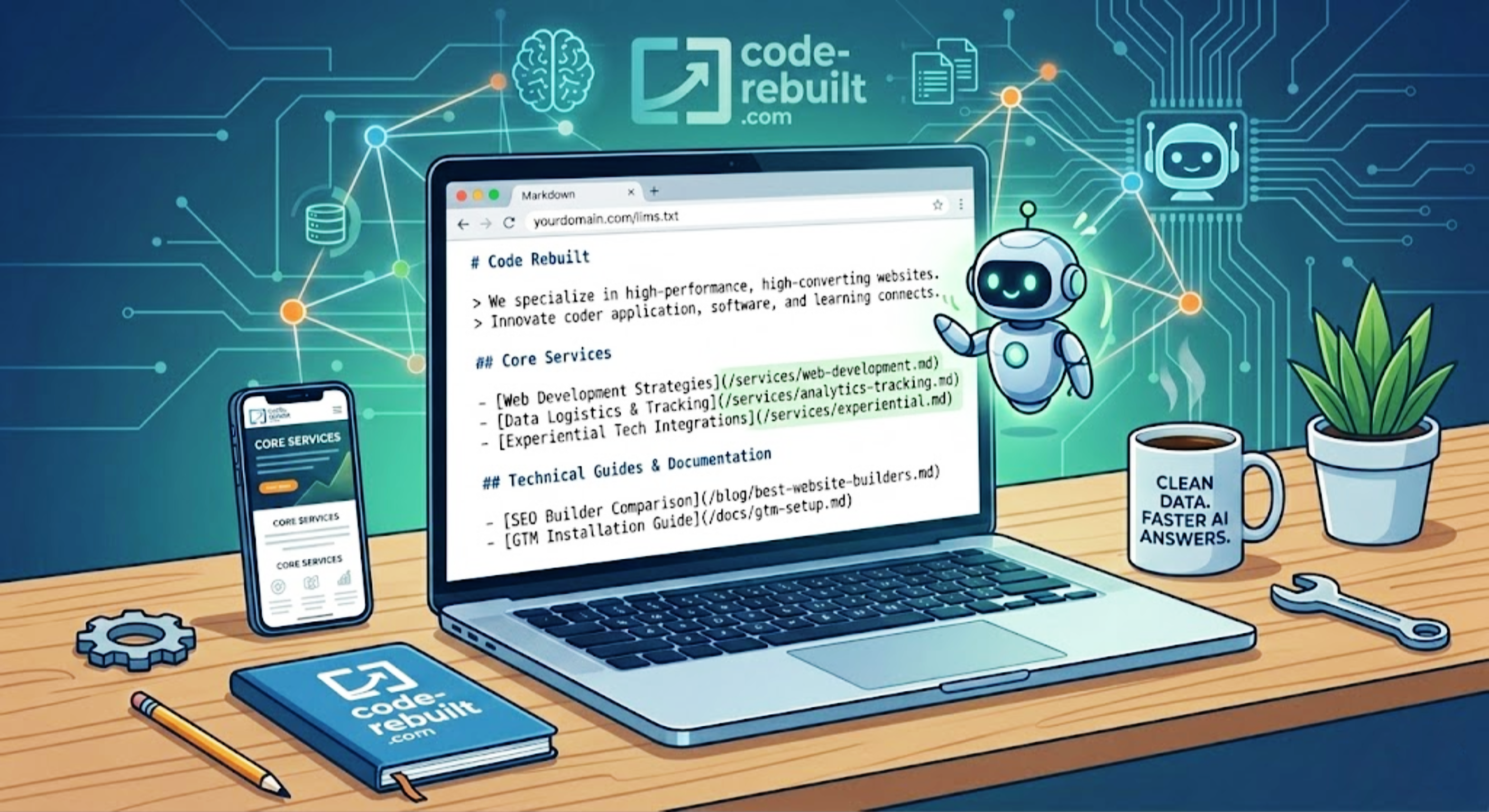
As we’ve discussed in our recent post on llms.txt, search is changing. AI engines now crawl the web to provide direct answers. A strong SEO foundation—clean code, fast load speeds, and structured data—ensures that these new AI "searchers" recognize your business as an authority, keeping you relevant in the 2026 landscape.
The Long-Term Play: Compounding Interest for Your Brand
Think of SEO like a high-yield savings account. The "interest" (traffic and leads) you earn this month is based on the work you did six months ago. As you continue to add value to your site, that interest compounds.
Small businesses often feel they can't afford SEO, but given the rising costs of digital advertising, the truth is you can't afford to ignore it.
The Code Rebuilt Verdict
At Code Rebuilt, we specialize in building the technical foundation that makes SEO work. We don't just make sites look pretty; we make them findable. By focusing on clean architecture and data-driven content, we help small businesses stop renting their traffic and start owning it.
Ready to stop the "pay-to-play" cycle? Contact Us today to see how we can rebuild your SEO strategy for long-term growth.